A technology tool
Provide people with ASD and other cognitive difficulties with an app that helps them use public transport.
BUSSLE® improves cognitive accessibility for people with ASD, other cognitive difficulties and older people when using public bus transport.
Explore the project →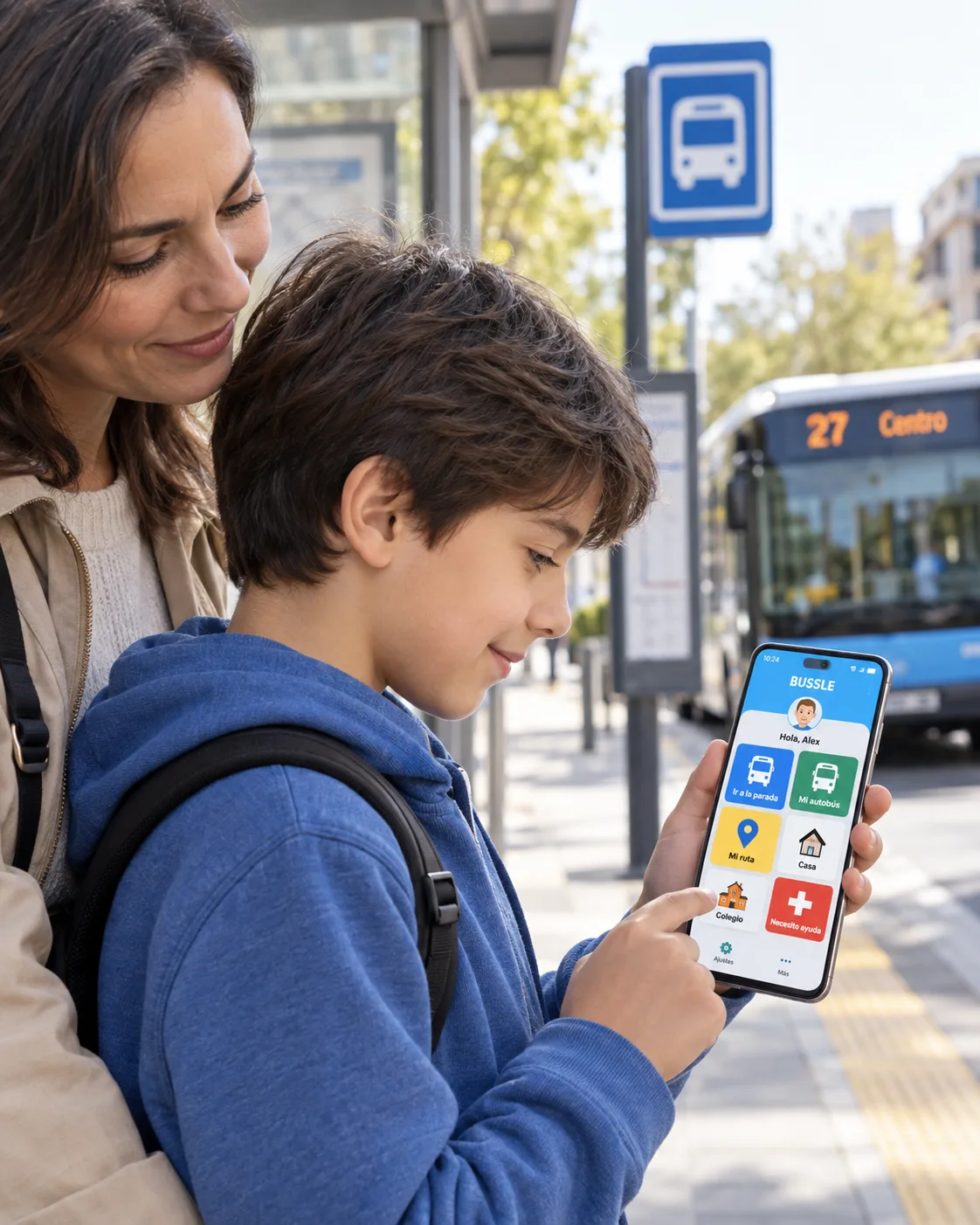
BUSSLE® turns a journey into an understandable sequence using pictograms, audio, geolocation and support from a reference person.
BUSSLE® was created to promote sustainable public-transport mobility for people with ASD and other cognitive difficulties, putting innovation at the service of people who may need additional support to travel more independently.
The solution combines transport information, geolocation, visual and audio support, and the possibility of monitoring by a tutor or reference person.
The project is structured around accessibility, scalability, transport data and support.
Provide people with ASD and other cognitive difficulties with an app that helps them use public transport.
Start with buses and evolve towards other transport modes and territories.
Use scheduled and real-time data to provide contextual guidance during the journey.
Allow tutors or reference persons to know the user’s position and the route being followed.
BUSSLE® combines planning, guidance, pictograms, audio, geolocation and assistance.
Designed for people who can benefit from visual and audio support to sequence tasks, plan, understand waiting times, make decisions and deal with unexpected situations.
The system supports both users with a tutor or reference person and users who can register directly.
Origin, destination and saved routes, with the option to assign names and pictograms to regular journeys.
Real-time route monitoring and presentation of actions through pictograms and audio support.
If the user deviates from the route or an incident occurs, the system can offer route recalculation and contact with the reference person.
The tutor or reference person can know the user’s position and receive alerts when a route is started or assistance is requested.
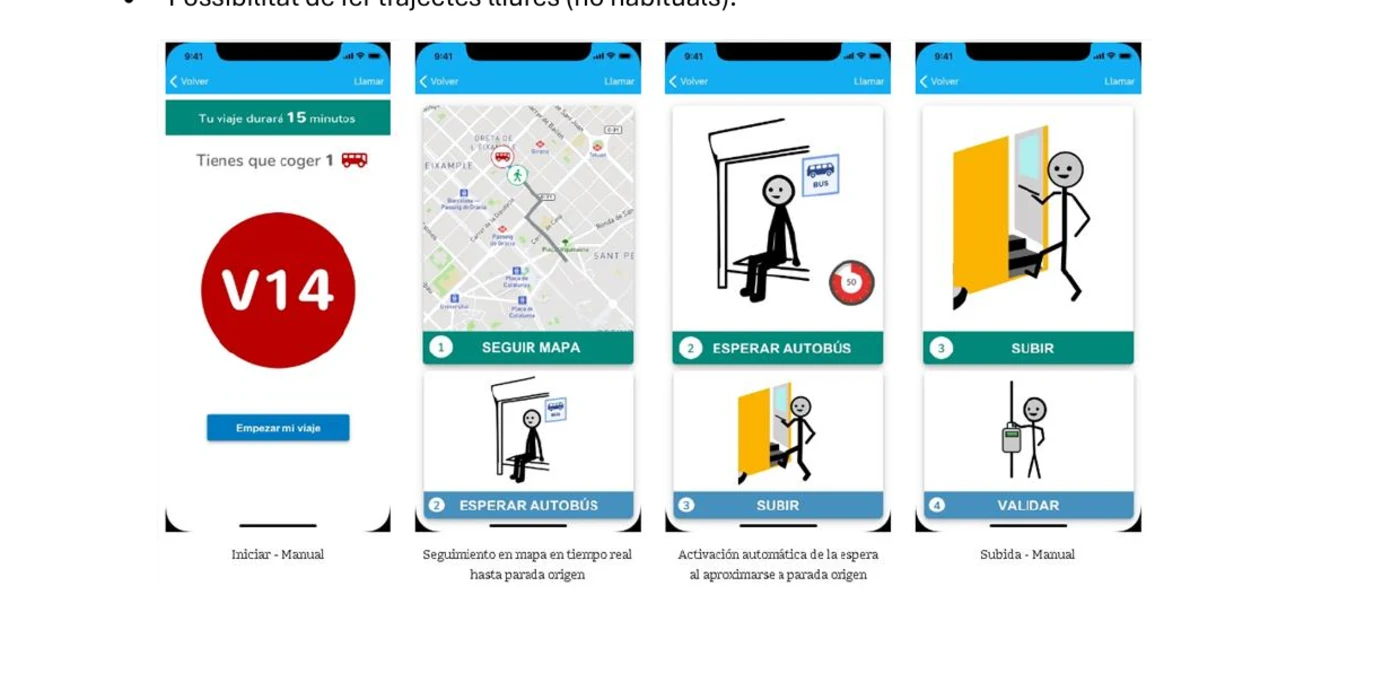
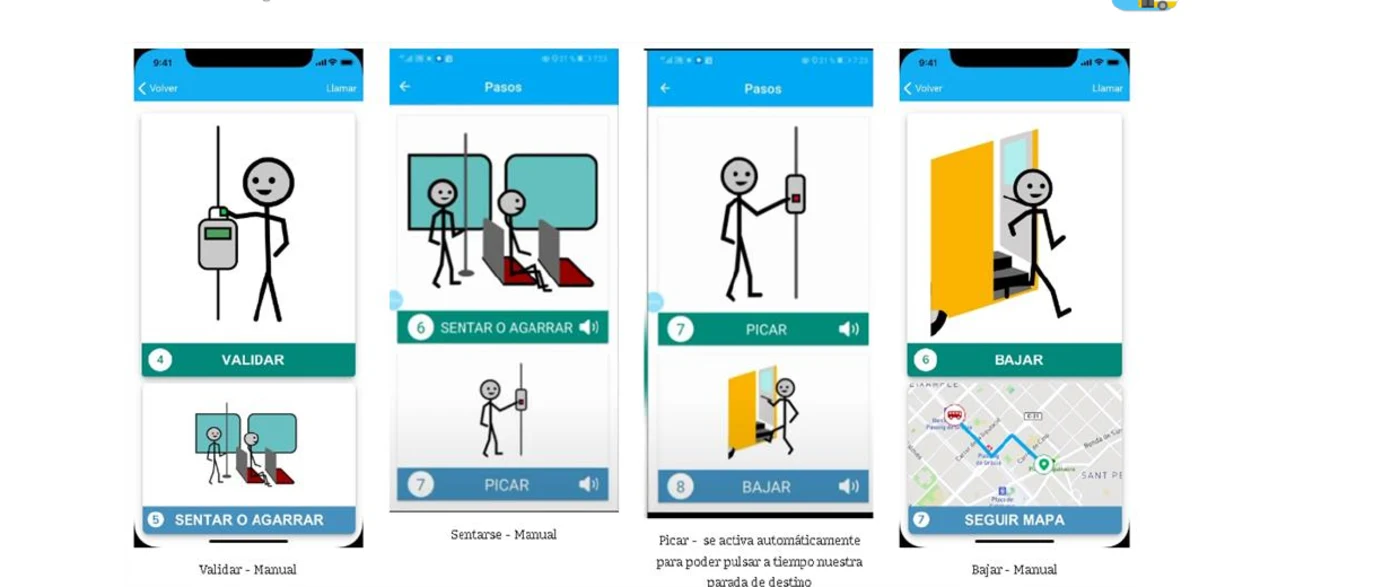
The functional sequence covers actions such as starting, walking to the stop, waiting, boarding, validating, sitting down, requesting a stop, getting off and continuing to the final destination.
The project has been built with complementary profiles and organisations.

It has contributed clinical knowledge on the specific needs of people with cognitive difficulties to make public transport easier to use. UnimTEA is the hospital’s Multidisciplinary Autism Spectrum Disorders Unit.
Urban mobility consultancy and development of transport-related technology applications, with experience in improving information and cognitive accessibility.

Specialist in fleet-management technology, real-time passenger information, communication with drivers and incident management.
An evolution built since 2021 through development, field trials and public presentation of the project.



From the award to the street. In 2023 BUSSLE entered a trial phase on urban routes in Girona operated by TEISA. In September 2024 the project announced availability on Google Play for urban routes in Olot and Girona and TMB routes 63, 78, V1 and H4 in Barcelona. In March 2025 a new update was released with improvements to orientation, geolocation and pre-route verification.